Investing in a Durable, Long-Term Roofing System
When an existing roof surpasses its design life or suffers severe deterioration across multiple elevations, isolated patchwork only delays the inevitable. A complete roof replacement restores your building's primary weather barrier from the decking upward.
DiChem Roofing Contractor Network connects homeowners and facility operators with local roofing contractors who execute full replacements. From removing old asphalt shingles down to the plywood substrate to installing self-adhering leak barriers and new ridge ventilation, matched contractors handle the complete installation cycle.
Whether you are replacing an aged roof to prepare for a home sale, improve energy efficiency, or recover from major weather wear, our network simplifies finding independent local roofing contractors.
What to Expect During a Full Roof Replacement
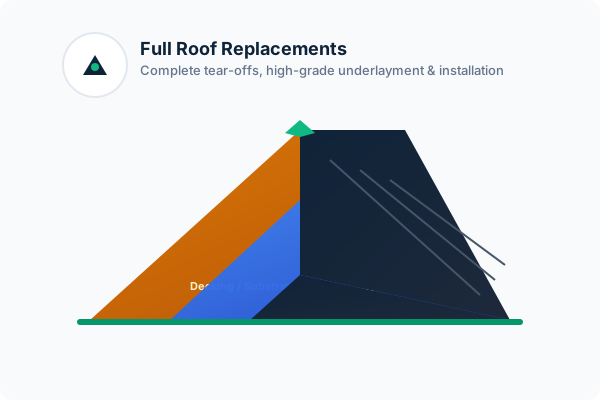
A proper roof replacement involves multiple engineered layers designed to shed water, handle temperature expansion, and allow attic moisture escape.
Complete Tear-Off
Crews strip away all layers of old shingles, paper, and rusted nails, exposing the structural wooden decking for comprehensive evaluation.
Decking Inspection
Damaged, rotted, or warped plywood or OSB sheets are removed and replaced with new lumber to provide a rigid, flat nail base.
Protective Underlayment
Waterproof ice-and-water barrier is applied along eaves, valleys, and rakes, followed by heavy-duty synthetic underlayment over all fields.
Finish Shingles & Caps
New shingles, starter strips, corrosion-resistant drip edge metal, ridge vents, and matching cap shingles are fastened to specification.
Key Signs Your Roof Requires Full Replacement
Recognizing when a roof has exceeded its functional threshold prevents unexpected leaks that damage ceilings, walls, and structural joists:
- Age Over 20 Years: Standard 3-tab asphalt roofs frequently reach physical limits between 20 to 25 years.
- Curling, Cupping, or Clawing: Shingle edges curling upward or middle tabs buckling indicate asphalt binder dry-out.
- Heavy Granular Loss: Gutters clogged with sandy mineral granules leave the asphalt substrate vulnerable to sun bake.
- Spongy or Sagging Sections: Depressions in the roofline indicate compromised structural decking or rafter decay.
Looking for commercial properties instead? Review our Commercial Roofing options, or read more about residential care on our Residential Roofing page.