Extending the Lifespan of Your Roofing Investment
Just as a vehicle requires regular oil changes and tire rotations, a building's roof requires periodic maintenance to perform reliably against weather extremes. Exposure to intense UV sunlight, thermal expansion, heavy rain, wind gusts, and fallen leaves gradually stresses sealants and roofing materials.
DiChem Roofing Contractor Network connects homeowners and facility operators with independent local roofing contractors who perform scheduled maintenance assessments. Identifying small cracks in pipe boots, resealing lifted flashing, and removing debris before damp leaves rot shingles can add years to a roof's usable lifespan while averting costly interior water damage.
Whether you need a seasonal checkup for your residence or a multi-year maintenance routine for commercial real estate, our network provides direct phone dispatch to local roofing professionals.
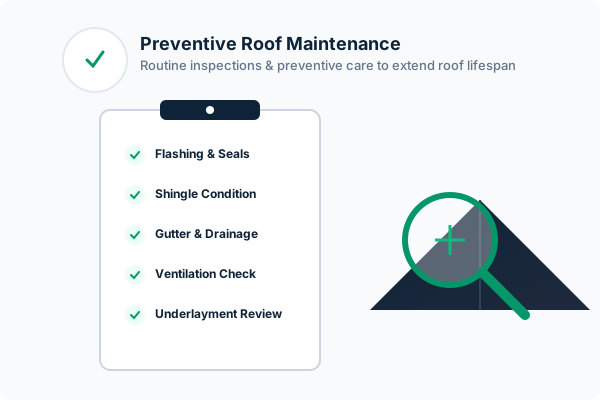
Key Steps in a Professional Maintenance Review
Local roofing contractors follow thorough inspection routines designed to spot and correct minor issues early.
Perimeter Flashing Inspection
Checking metal flashing along parapet walls, chimneys, sidewalls, and roof valleys for loosened fasteners, corrosion, or separated seams.
Sealant & Caulk Refreshing
Reapplying commercial-grade urethane or silicone sealants around exposed nail heads, counter flashings, and rooftop vent perimeters.
Debris & Valley Clearance
Clearing accumulated pine needles, leaves, and twigs from valleys and roof crickets where trapped moisture encourages shingle decomposition.
Gutter & Scupper Flow Check
Verifying that rainwater drains freely away from the roofline without backing up beneath the eave starter row or overflowing along fascia boards.
Shingle Tab Adhesion Review
Spot-checking that asphalt shingle sealant strips remain firmly bonded, securing individual tabs against strong wind gusts.
Ventilation Intake & Exhaust
Ensuring soffit intake louvers and ridge vents remain clear of insulation blockages and bird nests to maintain continuous air movement.
When Should You Schedule Roof Maintenance?
Most roofing manufacturers and industry experts recommend having your roof inspected by a roofing professional twice per year:
- Spring Checkup: Reviewing your roof after freezing temperatures, heavy snow, or winter storms to address loosened shingles or ice-dam wear.
- Autumn Preparation: Removing autumn leaf build-up, verifying gutter discharge, and ensuring flashings are sealed ahead of winter rains.
If maintenance checks uncover broader damage, local contractors can advise whether targeted Roof Repairs or a full Roof Replacement represents the most sensible next step.